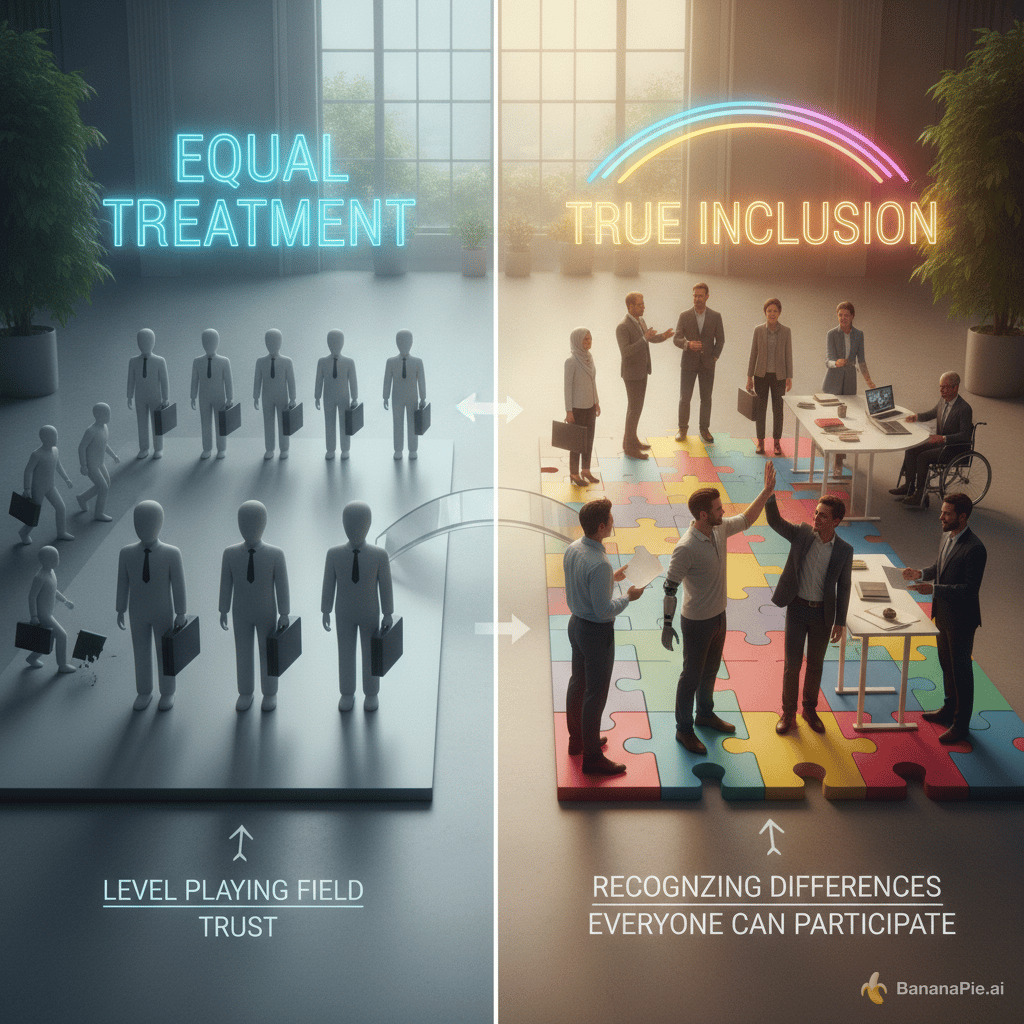
Equal treatment of employees offers several advantages, including promoting a level playing field based on skills and performance, fostering employee trust, and simplifying compliance with employment laws, thereby reducing discrimination claims. This approach enhances employee engagement and organizational performance (Shore et al., 2018). However, it has limitations; treating all employees identically may overlook individual needs and barriers, particularly for underrepresented groups, leading to potential inequities (Roberson, 2006). True diversity and inclusion require more than equal treatment; they involve recognizing and celebrating individual differences while creating an environment where everyone can participate fully. Therefore, organizations must implement inclusive strategies that address the diverse needs of employees without compromising fairness (Shore et al., 2018; Roberson, 2006).

@Isha Arora
Prompt
Equal treatment of employees offers several advantages, including promoting a level playing field based on skills and performance, fostering employee trust, and simplifying compliance with employment laws, thereby reducing discrimination claims. This approach enhances employee engagement and organizational performance (Shore et al., 2018). However, it has limitations; treating all employees identically may overlook individual needs and barriers, particularly for underrepresented groups, leading to potential inequities (Roberson, 2006). True diversity and inclusion require more than equal treatment; they involve recognizing and celebrating individual differences while creating an environment where everyone can participate fully. Therefore, organizations must implement inclusive strategies that address the diverse needs of employees without compromising fairness (Shore et al., 2018; Roberson, 2006).
Modello
NANO-BANANA
Tipo
Immagine
Mi piace
0
Proporzioni
1/1